JournalIdentity
What Algorithms Learn About Us — And What We Learn About Ourselves
Recommendation systems aren't reading your mind. They're reflecting a narrow, distorted slice of you back at yourself, over and over.

Sian Trombley
20 JUNE 2026 · 4 MIN READ

Open a video app you use often and scroll for two minutes. What you're looking at is, in a strange and literal sense, a portrait of you — assembled not from what you'd say about yourself if asked, but from thousands of tiny decisions about what you paused on, rewatched, or lingered near a fraction of a second longer than the thing before it.
It's tempting to treat this as either magic (the algorithm "knows" you) or manipulation (the algorithm is "controlling" you). Both framings overstate what's actually happening, and both miss the more useful and slightly stranger truth: recommendation systems build a model of you that is real but radically incomplete, and then they show that model back to you so consistently that it starts to feel like an accurate mirror.
The algorithm isn't reading your mind. It's reading your thumb.
What the system is actually measuring
A recommendation algorithm doesn't know that you value your friendships, or that you're trying to be more patient, or that the three minutes you spent watching an argument video happened because you were tired and bored, not because it reflects something you care about. It knows engagement signals: what you watched, for how long, what you skipped, what you came back to. It optimises for a proxy — attention and interaction — that correlates with your interests but is not the same thing as your interests.
The distinction matters because a system built to maximise engagement will, quite reasonably from its own narrow logic, learn that content provoking a strong reaction — irritation, outrage, a flicker of anxious comparison — tends to hold attention longer than calmer content does. It's not that the system has a preference for making you anxious. It's that anxiety-adjacent content is, on average, statistically sticky, and stickiness is the only thing it's actually measuring.
The mirror problem
Here's where it gets relevant to identity rather than just attention. Humans are reflexive — we take feedback from our environment and update our sense of who we are based on it, constantly and mostly unconsciously. If a feed consistently shows you a narrow slice of content because that slice historically kept you watching, you don't just consume that content. Over time, you start to half-believe it represents your actual interests and even your actual self, simply because it's the version of "you" that keeps getting reflected back.
This is a distorted mirror in a specific way: it doesn't show you a false image so much as an amplified fragment of a real one. If you watched three fitness videos out of genuine curiosity, and the system responds by making fitness content most of what you see for the next month, you may start to experience yourself as "someone who's really into fitness" — not because that was ever fully true, but because the environment has been quietly rearranged to make it feel true through sheer repetition.
What this does not mean
What the evidence says
It's worth being careful here, because the "algorithms are controlling your mind" framing overstates the current evidence. Recommendation systems are demonstrably good at predicting what will hold attention in the short term; they are much weaker at anything resembling deep psychological insight. Most of what feels like uncanny personalisation is closely-tracked behavioural correlation, not comprehension. This doesn't make the effect harmless — a system doesn't need to understand you to reshape your habits — but it's a different and more mundane mechanism than the mind-reading framing suggests.
It's also worth noting that this isn't entirely new. Editors have always chosen what goes on a front page based partly on what sells, and that choice has always shaped what readers came to think was important. What's different with algorithmic feeds is the scale of personalisation and the speed of the feedback loop — the "editor" now reshapes itself individually for each viewer, continuously, based on a signal (engagement) that only loosely tracks what that viewer would actually endorse as important to them.
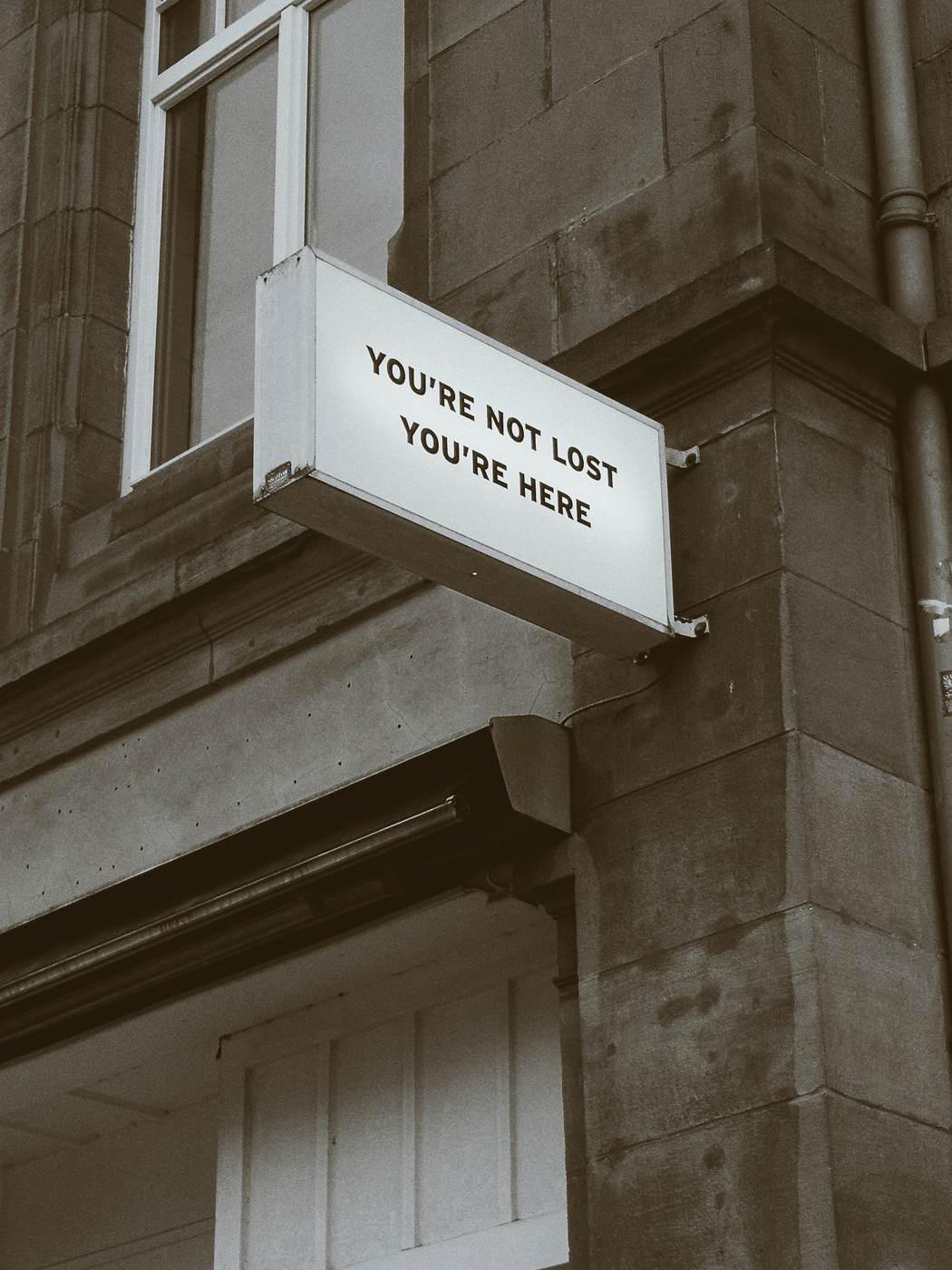
What to notice, and how to interrupt it
You can't opt out of algorithmic curation on most major platforms, and you probably don't want to — some of it is genuinely useful. But you can notice when the mirror has started to narrow, and nudge it back open.
- Periodically ask: is this feed reflecting something I actually value, or something that was simply easy to keep me watching on a particular tired evening?
- Deliberately search out and engage with something outside your usual pattern occasionally — most systems respond quickly to new signal, and a narrowed feed can be widened again faster than people expect.
- Notice the difference between "I enjoy this" and "I've been shown a lot of this" — they can feel identical from the inside, but only one of them is really about you.
20 minutes
Digital Values Exercise
Decide what technology is for in your life, before deciding what to cut.
Open the tool →A thought to keep.
The feed isn't lying about who you are. It's just telling a very short, very repetitive story about one part of you, on a loop, until the part starts sounding like the whole.