JournalDigital Life
Is Gaming Really the Problem?
For most kids, gaming is where their social life actually happens. For a small number, it becomes something harder to walk away from — and the two situations look different close up.

Sian Trombley
27 JUNE 2026 · 5 MIN READ
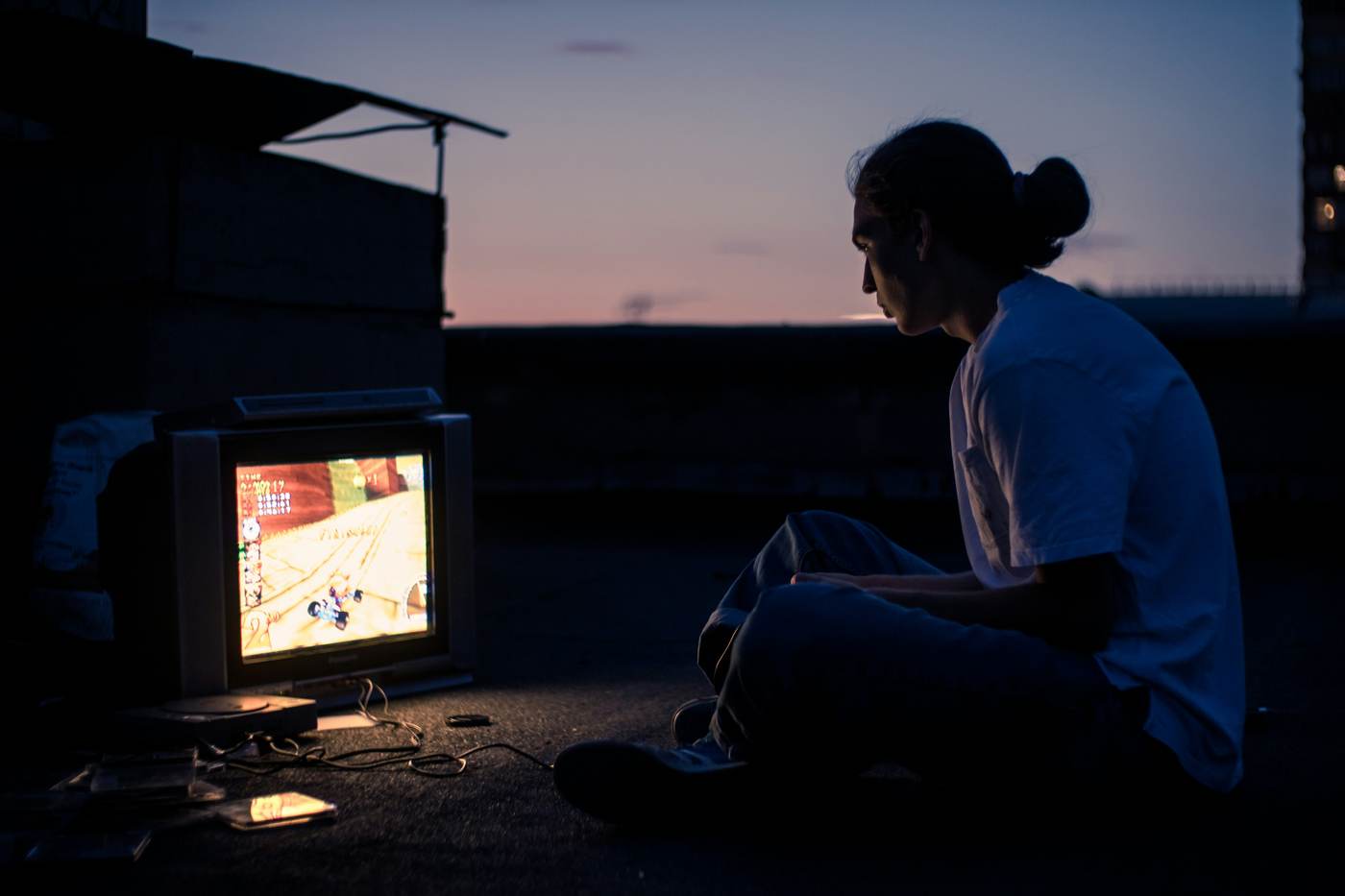
Picture a fifteen-year-old with a headset on, apparently alone in his room on a Tuesday night, and picture a parent looking in from the hallway and seeing exactly that: a boy alone, staring at a screen. What the parent often can't see, because it doesn't look like anything from the doorway, is that he's mid-conversation with four friends from school, two of whom he doesn't see much outside of this, coordinating a raid, teasing each other about a missed shot, working out who's free on Saturday. From the hallway it looks like isolation. From inside the headset, it's often one of the more socially active parts of his day.
This gap between how gaming looks and what it's actually doing is at the centre of most of the disagreement about it, and it's worth taking both sides of that disagreement seriously rather than picking whichever one confirms what you already suspected.
From the hallway it looks like a kid alone with a screen. From inside the headset, it's often the busiest social hour of his day.
Gaming as a social space, not just an activity
For a lot of teenagers, especially boys, gaming platforms function the way a shared physical space used to — a place you go to be with friends, not just a thing you do alone. Voice chat, in particular, does something that text-based platforms don't: it carries tone, timing, laughter, the small ambient noise of other people being present. Research on friendship formation suggests that shared activity, not conversation for its own sake, is one of the most reliable ways adolescent friendships are built and maintained, and gaming supplies exactly that — a shared task, a shared goal, hours of low-stakes side-by-side time. Robin Dunbar's work on how social bonds form points to something similar: closeness tends to grow out of repeated, low-pressure shared time rather than occasional big conversations, and multiplayer gaming sessions are, structurally, a lot of repeated low-pressure shared time.
None of this means every hour of gaming is socially rich. Plenty of gaming is solitary, or social in only a thin sense — playing "alongside" others without much real interaction. But dismissing gaming wholesale as isolating misses a genuine and fairly well-documented function it serves for a lot of teenagers, especially those who find in-person social initiation harder.
Where the concern is genuinely real
None of that cancels out the fact that gaming, for a minority of players, becomes something closer to compulsive — and that the concern here isn't invented. The World Health Organization added "gaming disorder" to its diagnostic classification in 2019, defined narrowly: a persistent pattern where gaming takes priority over other life interests and daily activities to the point of significant impairment, continuing despite negative consequences, sustained over at least twelve months. That's a considerably higher bar than "plays a lot" or "would rather game than do homework most evenings," which describes a large share of ordinary teenage gaming and isn't, on its own, a disorder.
The diagnosis itself remains debated among researchers — some argue it pathologises a normal enthusiasm shared by a huge, mostly healthy population of players; others argue that a genuine minority experience something that functions like other behavioural compulsions and deserves clinical recognition. Being honest about that disagreement matters more than picking a side to sound authoritative. What most researchers on both sides of the debate agree on is the practical marker worth actually watching for: not hours played, but whether gaming is actively displacing sleep, school, friendships and family relationships, and whether the young person seems distressed or unable to stop even when they say they want to.
What the games themselves are built to do
It's also fair to note that many popular multiplayer games use design mechanics closely related to those covered in our piece on retention design — daily login rewards, battle passes with time-limited progress, matchmaking that keeps a session just competitive enough to want "one more game." These mechanics make a real activity — social play — more compelling than it might otherwise be on its own, in the same way a well-designed slot machine makes gambling more compelling than plain chance would. That's a reasonable thing to be aware of without concluding the whole activity is therefore hollow.

What to actually look at, if you're a parent
Rather than starting from a time limit, it helps to start from a few concrete observations over a couple of weeks:
- Is sleep being displaced — is your teenager regularly still playing well past when they'd otherwise be winding down?
- Is gaming mostly social (voice chat with named friends, coordinated sessions) or mostly solitary and endless?
- When asked to stop or take a break, is there ordinary teenage grumbling, or something that looks more like real distress or anger disproportionate to the situation?
- Are other interests and relationships still present in the week, even if gaming is the favourite?
A conversation that starts with curiosity tends to go further than one that starts with a time limit. "Who are you usually playing with?" and "what's the best part of your evening online?" get you real information and open a door. "You're on that thing too much" tends to close it, and it also happens to be the least useful question, because it treats all gaming time as identical when it plainly isn't.
What this does not mean
None of this is a case for unlimited, unstructured gaming, and plenty of families do fine with clear boundaries around timing — not during meals, not right before bed, homework first. Boundaries and taking gaming seriously as a social good aren't in tension; most families that navigate this well hold both at once.
A thought to keep: the question worth asking isn't "how much is he gaming," it's "what would he be missing if this went away, and what would actually be left underneath." For most teenagers the honest answer includes real friendships. For a smaller number, the honest answer is closer to "not much else fits anymore" — and that's the distinction actually worth paying attention to.
30 minutes together
Family Technology Agreement
A short written agreement that applies to adults as well as children.
Open the tool →