JournalPresence
Why Your Phone Ends Up in Bed With You
Nobody plans to scroll for forty minutes after they meant to fall asleep. It happens anyway, most nights, for reasons that have surprisingly little to do with the content itself.

Sian Trombley
2 JUNE 2026 · 4 MIN READ
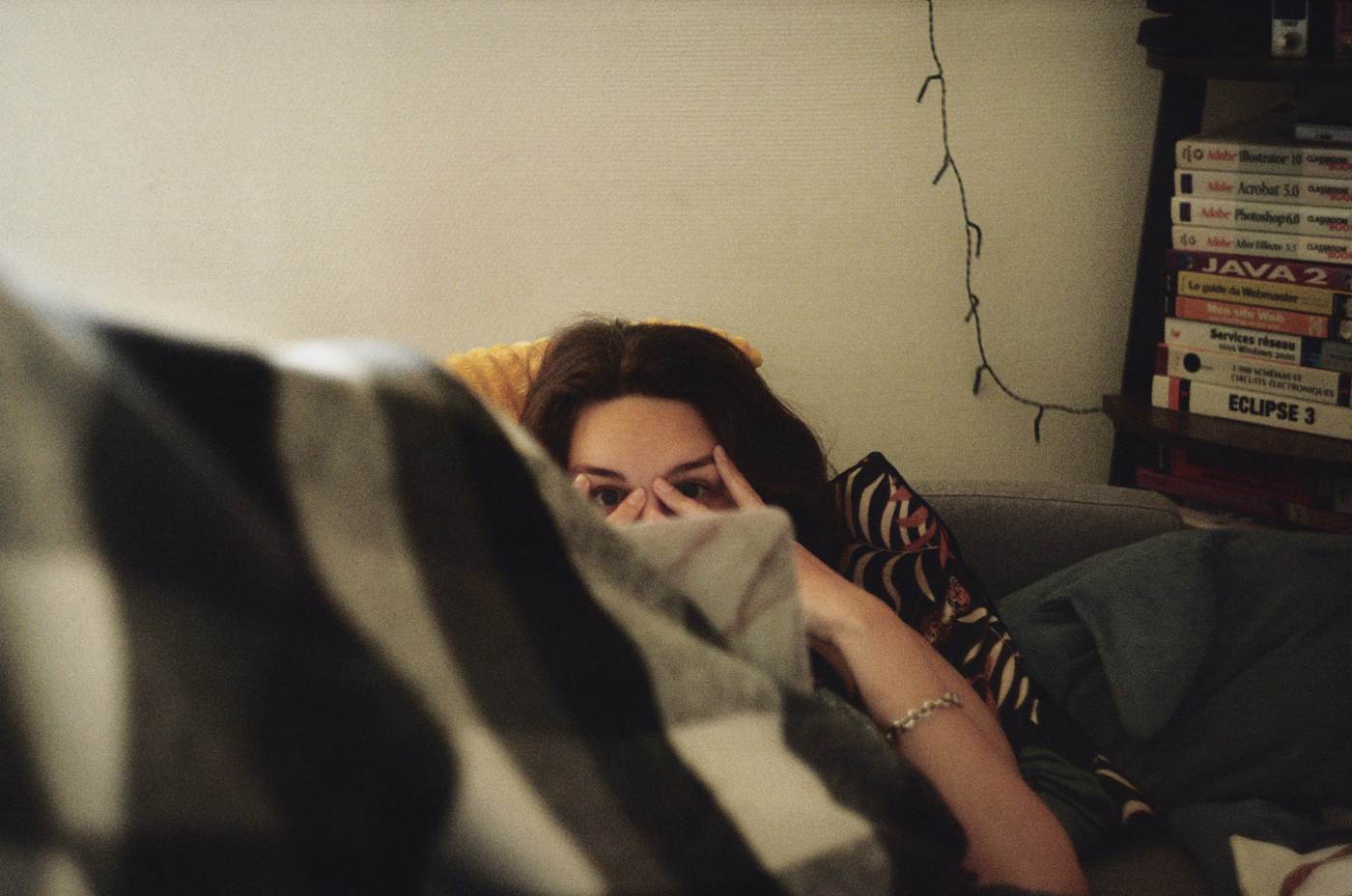
You brushed your teeth, turned off the main light, got into bed with every intention of sleeping. Then the phone came out "for a second" — to check one thing, set an alarm, reply to one message — and forty minutes later you're three videos deep into something you'll struggle to remember tomorrow, considerably more awake than when you started.
This pattern is common enough to have a name in sleep research: bedtime procrastination, sometimes given the more academic label revenge bedtime procrastination when it's driven by a felt lack of free time during the day. It isn't really about sleep at all in the moment it's happening. It's about reclaiming a sliver of unclaimed time after a day that felt like it belonged to everyone except you.
The problem was never that your phone is in the room. It's that nothing in the experience tells you when to stop.
Three separate problems wearing one disguise
It's worth pulling apart what's actually happening, because "phones ruin sleep" flattens three distinct mechanisms into one vague warning, and only one of them is really about light.
Light
Screens emit light in the blue wavelength range, which suppresses melatonin production more than warmer light does. This effect is real but modest for most modern phones at typical evening brightness and distance — current devices and their night-mode settings have reduced it considerably compared to a decade ago. It's a real factor, but for most people it isn't the dominant one, and fixating on it alone ignores the two mechanisms that usually matter more.
Content
What you're looking at matters more than the fact that you're looking at a screen. An email from work, a stressful headline, or a message that needs a difficult reply activates the same threat-appraisal systems that make it hard to sleep after any stressful input, screen or otherwise. A video of someone's kitchen renovation is a very different nervous-system experience than reading an argument in the family group chat.
Arousal and stopping cost
This is the piece most people underestimate. Feeds built on a "one more" structure — short-form video, infinite scroll, autoplay — create a state of mild engagement that's specifically designed to make stopping harder than continuing. There's no natural pause built into the experience the way there is in a chapter ending or a TV episode finishing. The cost of stopping is a decision you have to actively make, over and over, at exactly the moment your self-regulation is lowest: tired, in bed, defences down.

Why bedtime specifically
Bedtime procrastination tends to be worst on days that felt busy, over-scheduled, or emotionally demanding — the later the day, the more the desire for "time that's mine" builds, and for many people bedtime is the only unclaimed stretch left. Ironically, the more exhausted the day made you, the stronger the pull to stay up scrolling, even though that's exactly when sleep matters most. Recognising the motive changes the intervention: this usually isn't a discipline problem, it's an unmet need for unstructured time earlier in the day showing up at the worst possible moment.
What the evidence says, and what it doesn't
What the evidence says
NHS and sleep-hygiene guidance consistently recommends winding down screen use before bed, largely because of the arousal and content effects rather than light alone. The size of the light effect specifically has likely been overstated in popular coverage relative to the more robust effects of stimulating content and the difficulty of stopping an autoplay feed.
What this doesn't mean is that checking your phone once before sleep is uniquely damaging, or that everyone who scrolls in bed is heading for insomnia. Plenty of people scroll briefly and fall asleep fine. The pattern worth paying attention to is the one where "for a second" reliably becomes half an hour, because that gap — between intention and outcome — is the actual signal that something in the design is doing more work than your willpower.
In real life
The most effective changes tend to target the moment of temptation rather than relying on willpower once you're already lying down, phone in hand, defences at their lowest point of the day.
Try this.
- Charge your phone outside the bedroom, or across the room rather than beside the pillow — distance turns a nightly negotiation into a single decision made earlier.
- Protect fifteen minutes of unstructured time earlier in the evening, on purpose, so bedtime doesn't have to carry the whole day's need for "time that's mine."
- If you do bring your phone to bed, choose the content in advance rather than opening a feed — a specific podcast episode has a natural end; an algorithmic feed doesn't.
Nightly, 5 minutes
Digital Evening Reset
A short sequence that ends the input day before the sleep day begins.
Open the tool →A thought to keep.
The forty minutes you didn't plan to spend scrolling in bed weren't a failure of discipline. They were a day that didn't leave you enough unclaimed time finally getting some, at the one moment it could least afford to.