JournalAttention
Why We Reach for Our Phones When Nothing Is Wrong
Nothing is stressful, nothing is boring, nothing is urgent — and the phone still comes out. The trigger isn't a feeling. It's a gap.

Sian Trombley
4 MAY 2026 · 7 MIN READ
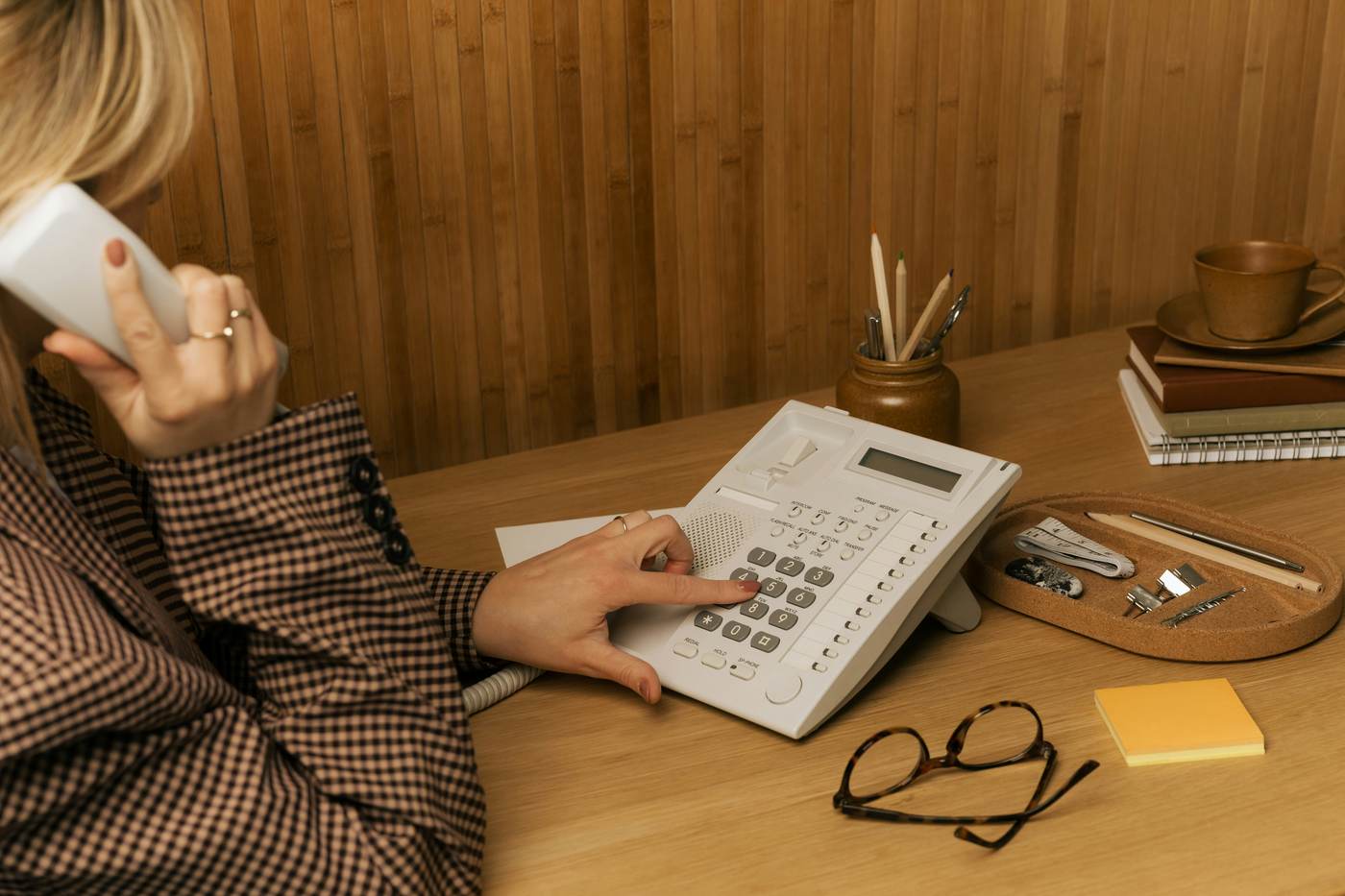
You are standing at the kettle. The water hasn't boiled yet. There is nothing to do for forty seconds, and somewhere in that nothing, your hand has already found your phone and unlocked it, and you are looking at something — an app icon, a notification badge, the weather — without having decided to look at anything at all.
Ask someone why they picked up their phone in a moment like this and they will usually reach for an emotional explanation. "I was bored." "I was anxious." "I wanted to check something." These explanations feel true after the fact, but they are mostly reconstructions. The honest answer, in the vast majority of these small unremarkable moments, is closer to: there was a gap, and the phone filled it. The feeling came second, if it came at all.
The trigger isn't stress, or boredom, or loneliness. It's an unfilled second.
The trigger is structural, not emotional
This matters because it changes where you look for the cause. If you assume boredom or anxiety is driving the behaviour, the intervention becomes "manage your emotions" — which is real, and useful in the moments that actually are emotional, but misses most of what is happening during an ordinary day. A great deal of phone use isn't a response to an internal state at all. It's a response to an external structure: a pause in the sequence of events, with no assigned next action.
Psychologists who study habit formation describe behaviour as being organised around cues, not intentions. A cue can be a place, a time, a preceding action, or — this is the one that matters here — an absence. Waiting for a kettle to boil isn't an emotion. It's a gap: an interval with a start and an end but no content. Human attention doesn't tolerate unstructured gaps well; it looks for the nearest available thing to do, and for most adults in the 2020s, the nearest available thing is a smartphone in a pocket or on a counter, already primed with dozens of tiny reasons to be picked up.
This is worth sitting with, because it's a more useful and less flattering explanation than the ones we usually tell ourselves. It isn't that you are especially anxious, or especially addicted, or especially weak-willed in the checkout queue. It's that checkout queues, kettle-waits, red lights, lift doors, and the ten seconds before a meeting starts are all, structurally, gaps — and gaps get filled by whatever is cheapest and closest.
The loop that makes it automatic
Once this pattern repeats enough times in enough similar contexts, it stops being a decision at all. This is the mechanism behind what researchers call automaticity: behaviour that runs off contextual cues rather than conscious evaluation. You don't decide to check your phone at a red light any more than you decide to blink. The context — stationary car, brief pause, hands free — has become sufficiently associated with phone-checking that the behaviour fires before deliberate thought gets involved.
- Trigger — an unstructured gap opens (waiting, pausing, transitioning)
- Automatic reach — the phone is retrieved without a conscious decision
- Quick reward — something novel, social, or informational appears
- Interruption — the gap ends, or something else demands attention
- Repeat — the same context reliably produces the same reach next time
The reward stage matters too, but it's often overstated as the whole explanation. Yes, there's usually something mildly interesting on the other side of the unlock — a message, a headline, a red badge — and yes, the unpredictability of what you'll find plays a role, borrowing from the same variable-reinforcement principles that make slot machines compelling. But the reward is downstream of the trigger. Remove the reward and people still reach for the phone out of habit before remembering there's nothing there. Remove the gap, on the other hand, and the whole loop has nothing to attach to.
Why this feels different from "distraction"
We tend to talk about phones as distracting us from something — from a book, a conversation, a task. But the moments this article is about aren't distractions from anything in particular. There was no task being interrupted at the kettle. This is closer to what Sherry Turkle, drawing on decades of interviews about technology and solitude, describes as an allergy to unstructured time: a discomfort with moments that have no assigned content, filled reflexively rather than because anything meaningful is being sought.
What the evidence says
Research on habit and context-cued behaviour consistently shows that once an action is repeated enough times in a stable context, it becomes triggered by that context automatically, with reduced input from conscious intention. Work on notification anticipation adds a related finding: proximity and awareness of a device — not just active notifications — measurably shifts where attention sits, even when nothing has actually happened. What this does not mean is that everyone who checks a phone in a gap is anxious, dependent, or lacking willpower — for most people, most of the time, it is simply the strongest habit loop available in that context.
What technology changes
None of this is new to phones. Humans have always filled small gaps with something — a cigarette, a newspaper, idle conversation, staring into space. What's changed is the object available to fill the gap: it's now the same object that holds your calendar, your closest relationships, your work email, and an endless supply of novel content, all accessible in under a second, all portable, all with you at the kettle. Previous gap-fillers had natural limits — you finished the cigarette, you ran out of newspaper. The phone does not run out.
It's also worth noting what the phone doesn't do here: it doesn't create the gap. The gap was always going to exist. Waiting for a kettle is not a modern invention. What's modern is that the gap now has a near-permanent occupant, which means those tiny unstructured pockets of a day — once a place where a mind might wander, notice something, or simply rest — are increasingly pre-filled before they can become anything else.
What to notice
The single most useful thing you can do with this reframing isn't to try harder to resist the phone in the moment — by the time you notice you have it in your hand, the automatic loop has often already run. It's to get curious, afterwards and without judgement, about which specific gaps in your day reliably trigger the reach. Not "I use my phone too much" — that's too vague to act on — but "the walk from the front door to the kitchen," or "the two minutes after I sit down at my desk," or "any time I'm the first person somewhere."
- Notice one recurring gap this week — a specific transition, not a general time of day.
- Ask what's actually available in that gap besides the phone: the view, the conversation, simply the sensation of waiting.
- Don't aim to eliminate the reach. Aim to notice it happening, which is often enough to loosen the automaticity slightly.
Try this.
- Pick one everyday gap — the kettle, the lift, the school pickup line — and leave your phone one room away from it for a week.
- When you notice the urge to reach for it, name the gap out loud in your head: "this is a waiting gap," not "I need my phone." Naming the structure, not the feeling, is what interrupts automaticity.
- Notice what naturally fills the space instead. It's often less interesting than you'd expect, and occasionally more.
In real life
A friend of mine, a therapist herself, told me she'd started noticing that she checked her phone every time she paused at the top of the stairs in her house — not a place she'd have predicted, and not one she was consciously anxious about. What she found, once she paid attention, wasn't anxiety or boredom. It was simply that the stairs were a two-second gap between two rooms, and her phone was in her pocket, and her hand had learned, over hundreds of repetitions, that this was a moment when the phone came out. The insight wasn't dramatic. But naming the actual trigger — a specific two-second architectural gap, not "phone addiction" in the abstract — was what let her do something small and specific about it, rather than something vague and moralising.
What this doesn't mean
None of this means every phone check is meaningless or that gaps should always be left empty. Sometimes the phone check in a gap is exactly right — you're waiting for news about someone you love, or you genuinely have three minutes and a message to send. The point isn't that filling gaps is wrong. It's that most of us are filling gaps automatically, without any decision being made at all, which means we've lost the ability to choose when a gap is worth filling and when it might be worth simply being a gap.
A life with no unstructured gaps left in it is a life with very little room for a thought to arrive uninvited.
12 minutes
Notification Audit
A single pass through your settings, keeping only the interruptions you'd actively choose.
Open the tool →A thought to keep.
The next time you catch your phone already in your hand and can't quite remember deciding to pick it up, resist the urge to explain it with a feeling. You probably weren't anxious, or bored, or even curious. You were standing in a gap, and the gap got filled, the way gaps always do, by whatever is nearest. The question worth asking isn't "why am I like this" — it's "what was actually in that gap before the phone was," and whether you'd like some of it back.